
I feel I've accomplished a lot. I'm on my way to being a pilot. The steps I've taken so far are the most important as they were the planning steps. Gathering information, getting my medical, covering costs, signing up for lessons, getting my course materials, finding my way around and finally taking lessons.
If I had something to do different I would have rather taken this course when I did not have so many other things I had to do. WISE took much longer then a regular English class and second semester senior year was busy for me. Studying the flight books, researching, meetings and actual lessons and time at flight school was so much to fit in with trying to get into college, lacrosse and all my other classes. As far as my project I don't think I would have done anything differentially. Learning to fly is deadly serious and cannot be rushed.
I'm proud I'm actually flying. Not many people, kids or adults have gotten as far as I have. Someday I will have my pilot's license and join a club that not many people ever belong to. I'm disappointed I had to spend so much time on research rather then studying at flight school. I felt this took away from my focus rather then adding to it. I could have used the time I spent researching getting closer to my pilots license.
My research was reading articles from magazines. newspapers and watching airplane movies. The focus from my proposal was to learn more about the whole picture of flying. Some was interesting like learning about electric engines and private space fight but none helped me towards my goal of being a pilot. I would rather have researched my flight school books and movies only.Research showed me different types of flying opportunities, different places to get air related jobs and how big the field is.It did not change my focus but did inspire me to look at ROTC seriously. In college I'm going to take Air Force ROTC. I was unsure of this before WISE so I guess that is how research helped me the most. I would not have made that decision without all the reading I did.
Hands On I am flying. I've taken a discovery flight and two lessons.
In my lessons I control the plane with help and completely at times. I clear with the control tower, take off, maneuver and watch landing. Often I am flying the plane alone and in total control. Flying lessons also include pre checks where the pilot looks over the plane and learning about the facility and air field.I spent many days at the East Hill flying club studying and learning.
WISE was good. I did not know it was going to take up so much time. I'm glad I choose to blog as I like it better then journaling. I think it is more fun to read so people will be more interested. I love that I am on my way to being a pilot and don't know how I will continue this - in college or summers, but I know I will continue and someday be a pilot. WISE helped me get started on the path.
Wednesday, May 26, 2010

Lesson number 2
Yesterday I took my second flying lesson. I was nervous and didn't want to schedule it because I didn't think I was ready for it. Chapter 3 was long and hard to understand with all of the descriptions of aerodynamics. All my worry was for nothing I was ready for it.
When I got to the air field I had to go over a few thing in my book for last minute information I could use in the air than went over maneuvers that I would be doing in the air. After that we got our head sets and headed out the door to the hanger. We walked over to the plane in the hot sun and did a strict check to make sure everything was working properly and that the plane was fly able. After we went through the check list we pushed the plane over to the fueling station to distribute fuel into each wing where the separate gas tanks are. After that we went through our pre flight check list which was checking all the systems in the plane. We contacted the tower and asked for permission to taxi down the runway. So once we got clearance from "Ithaca Ground" I pushed the throttle all the way in to full power and in a matter of seconds we were in the air. We flew right over the lake and had a beautiful view of Ithaca. I loved flying past the high school knowing my friends were in class and I was just flying over them. Once we got into our practice zone I started my maneuvers and did very well with them even though I was still a little nervous about it. After I had finished we started heading out of the practice air space back to the air port. So I called into Ithaca tower which is the control tower for planes in the air and asked permission for landing. Once we were clear for the runway I lined up the plane with the runway and brought the flaps all the way down. At this point I thought that I was going to give the controls over to my instructor, but he just kept giving me instruction as to what I should be doing so I slowed the plane down to about 40 mph and with just a little help from my instructor I put the plane down nice and easy. At this point I felt like a million bucks because that was my first landing. After landing we taxied over to foxtrot which is a direction on where to go. So I headed to that direction and we did the post flight check list then bought the plane back to the hanger.
Flying is now and I believe will always be a part of my life its just when I am up in the air I feel like nothing can hold me back and I am as free as a bird just flying above everything watching the earth move under me as I'm flying by. I don't think there is another feeling like it in the world.
When I got to the air field I had to go over a few thing in my book for last minute information I could use in the air than went over maneuvers that I would be doing in the air. After that we got our head sets and headed out the door to the hanger. We walked over to the plane in the hot sun and did a strict check to make sure everything was working properly and that the plane was fly able. After we went through the check list we pushed the plane over to the fueling station to distribute fuel into each wing where the separate gas tanks are. After that we went through our pre flight check list which was checking all the systems in the plane. We contacted the tower and asked for permission to taxi down the runway. So once we got clearance from "Ithaca Ground" I pushed the throttle all the way in to full power and in a matter of seconds we were in the air. We flew right over the lake and had a beautiful view of Ithaca. I loved flying past the high school knowing my friends were in class and I was just flying over them. Once we got into our practice zone I started my maneuvers and did very well with them even though I was still a little nervous about it. After I had finished we started heading out of the practice air space back to the air port. So I called into Ithaca tower which is the control tower for planes in the air and asked permission for landing. Once we were clear for the runway I lined up the plane with the runway and brought the flaps all the way down. At this point I thought that I was going to give the controls over to my instructor, but he just kept giving me instruction as to what I should be doing so I slowed the plane down to about 40 mph and with just a little help from my instructor I put the plane down nice and easy. At this point I felt like a million bucks because that was my first landing. After landing we taxied over to foxtrot which is a direction on where to go. So I headed to that direction and we did the post flight check list then bought the plane back to the hanger.
Flying is now and I believe will always be a part of my life its just when I am up in the air I feel like nothing can hold me back and I am as free as a bird just flying above everything watching the earth move under me as I'm flying by. I don't think there is another feeling like it in the world.
Tuesday, May 11, 2010
Air Force One


Directed by well-known action director Wolfgang Petersen ("The Perfect Storm", "Troy", "Outbreak", "Das Boot"), Air Force One is a movie about the US president's airplane. This movie came out in 1997 and starred Harrison Ford; it won two Academy Awards.
On the way home from Russia, the president's plane is hijacked by Russians posing as reporters. The president pretends to escape in a pod but remains hidden on board.The president was in Russia to outline the USA's new "Zero-tolerance" policy with respect to terrorism. So now his wife and daughter are in danger and the US is not supposed to respond to the terrorists.
Planes are featured in many ways in this movie. Air Force One is the best equipped plane in the world and it is interesting to see it shown. The plane has to refuel midair and the viewer gets to see that process...it looks tricky! A KC-10 refuels AF1. A F-15 escort plane follows Air Force One trying to help out. In the end the president is rescued by a C-130 Hercules on a zip line mid air! Not a maneuver I want to try.
Being a pilot has many career paths. From the military helping out to flying for the President of the United States, this movie showed many of the options available to a pilot.
Thursday, May 6, 2010
Unrestricted Aerospace

Pappalardo, Joe. Unrestricted Aerospace. Popular mechanics. Aug 2008.
In the Mojave desert a private company, XCOR Aerospace is hoping to build a space craft to take paying customers into space. Other companies also are working in the desert. Scaled Composites is the company that invented the first aircraft that flew around the world without having to refuel. SpaceShipOne became the first private craft to take a pilot into outer space. This ship won the Ansari prize of 10 million dollars!
Aerospace history takes place in secert areas where designs can be tested without people spying and where if a mistake happens the craft will not crash into a shopping mall.The US Air force base was at Groom Lake Nevada; here is where they tested planes for defense contractors. Some tenants work on 'black' projects, this means they are top secret.Mojave is called the New Area 51 - the old Area 51 is where our government is supposedly hiding alien aircraft they captured.
Mojave's first airport was built in 1935. The government took it over in WW II to use as a Marine air station. In 2004 the FAA certified Mojave as a spaceport. This means private companies can launch people into space from here. New Mexico is also building a spaceport.Plenty of jobs exist here from both military and private contractors.
Wednesday, May 5, 2010
Would You Survive
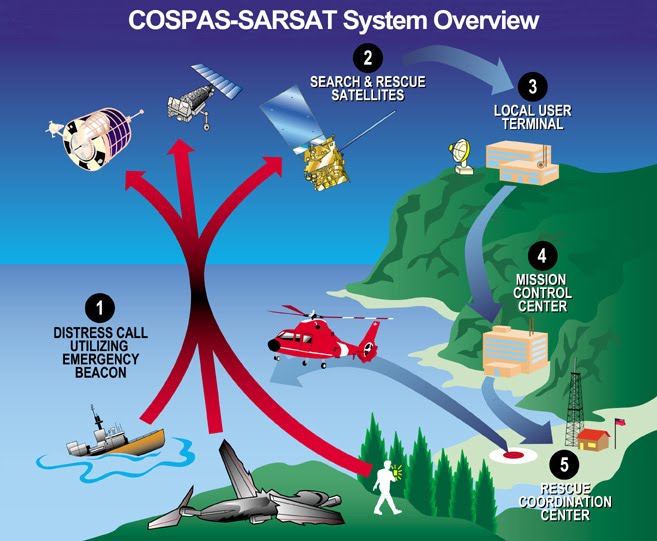
Segal, Gregg.Would You Survive. Popular Mechanics, Aug. 2005.
As a nice follow up to my last chapter in flight school about airplane collusion avoidance, I'm doing this article about surviving in the wilderness if your plane crashes. Guess he didn't study the aircraft collision chapter very well!
This article is about Scott Thurner who was driving his Cessna 172 from Nevada to Colorado when it iced up. Scott did not file a flight plan and survived the crash landing but was 15 miles from the nearest road. The weather conditions were bad and freezing. Not filing a flight plan was stupid and nobody knew where he was.
The article goes on to say that statistically people are found in 3 days, dead or alive.
It says what you need to pack for survival and constructs a eight piont plan to make it through the first 72 hours. Caleb Randells, a instructor in the Air Force wrote a book, the Art of Keeping Your Ass Alive. It tells how to stay alive until help comes.
Scott Thurner is still alive today. he dug a snow cave and used the plane door as a roof. He set off his emergency beacon and rescuers found him in 24 hours. The strategies recommended are: stay with the plane and signal for help. Drawing a X on the wing can help.
Tuesday, May 4, 2010
Chapter 4 Section A : Safety Of Flight

This section was easy to understand and because it was related to safety, parts of it related to my life guard training. Pilots operate under VFR/ Visual Flight Rules or IFR/ Instrument Flight Rules. Studies show that the majority of mid-air collisions occur in VFR conditions so many techniques are for collision avoidance. Pilots must developed effective visual scanning which is short spaced eye movements. I didn't realize that if you see another airplane that doesn't seem to be moving your probably on a collision course.
Sky conditions can effect your ability to see traffic, obviously a sunny day is better than a cloudy day but phenomenon can occur that pilots must be aware of and take steps to overcome. Empty field myopia is when your looking at a sky with nothing in it; your eyes only tend to focus 10 to 30 feet ahead, a spot on your windshield can actually be a plane far away. Night myopia is worse because your eyes only focus from 5 to 6 feet in front of you. Airplanes, like cars, have blind spots and pilots learn to look around them. Before starting any maneuvers, like landing, pilots make clearing turns that are at least a 180 degree change in direction, to see around blind spots and better to see the area. The FARs spell out right-of-way rules. When two aircraft of the same category come together the plane on the left gives way. The right away goes in this order...
1. Aircraft in distressed
2. balloon
3. A glider
4. Aircraft refueling
5. Air ship (blimp)
6. Airplane
7. Rotor craft (helicopter)
Another safety feature of the FARs is minimum safe altitude. Over a congested city you have to be 1000 feet over every obstacle like a sky scraper. In a uncongested area you must be 500ft over the land or water. To fly over hazardous terrain like mountains pilots get specialized training. This training teaches you about wind conditions that can happen over open water or around mountains.
This section ended with introduction on Postitive Exchange Of Flight Controls. The Instructor will demonstrate a manuver than pass the controls to me. When this happens the FAA recomend this three step process.... the instructor says "you have flight controls." the student says "I have the flight controls." the instructor says "You have the flight controls." Now we know who has control over the plane.
Friday, April 30, 2010
Section C Chapter 3: Aerodynamics Of Maneuvering Flight continued
Section C goes on to explain the forces that act when turning a plane. Before a plane can turn it must over come inertia. The necessary force is caused by using the ailerons. The horizontal component of lift causes the airplane to turn. The center seeking force that causes the airplane to turn is called centripetal force. Centripetal force works against inertia, this is called centrifugal force. Centrifugal force isn't really a force. Its really inertia wanting to go straight again. Another force is when you roll into a turn one wing has more lift than the other and the inside wing has more drag, this can cause an adverse yaw which has to be corrected by using the rudder. When you enter a turn the plane feels like it wants to keep rolling, pilots have to be careful not to over bank or over correct. Airplane performance is judged on rate of turn and radius of turn. Rate of turn is the amount of time it takes for the plane to turn a certain amount of degrees. The amount of horizontal distance a airplane uses to complete a turn is the radius of turn.
Load factor is the ratio of the load supported by the airplanes wings to the wait of the plane. In turning a airplane you have to know your load factor or you can loose altitude. Load factor is also important because if not correctly maintained it can cause stalls. The limit load factor is the amount of stress an airplane can stand before structural damage starts. Most small planes weighing 12,500 are certified either normal, utility, or acrobatic depending on their limit load factor, you wouldn't want to do tricks in a normal airplane because it could break up. To know what your planes load limit factor is you refer to V/g diagram, staying below the limit load factor will prevent stalls and damages to the plane.
Load factor is the ratio of the load supported by the airplanes wings to the wait of the plane. In turning a airplane you have to know your load factor or you can loose altitude. Load factor is also important because if not correctly maintained it can cause stalls. The limit load factor is the amount of stress an airplane can stand before structural damage starts. Most small planes weighing 12,500 are certified either normal, utility, or acrobatic depending on their limit load factor, you wouldn't want to do tricks in a normal airplane because it could break up. To know what your planes load limit factor is you refer to V/g diagram, staying below the limit load factor will prevent stalls and damages to the plane.
New Dawn for electric rockets

Author: Choureiri, Edgar Y.
Source: Scientific American; February 2009
I wonder if I'll ever fly an electric propelled plane? right now electric plasma engines are only fueling space probes but, I predict, this technology will soon fuel all aircraft.
Burning chemical fuel is how rockets generate thrust. electric rockets generate thrust by applying electric our electromagnetic fields to charge particles, also called plasmas, to move them. This next point is why rockets, not airplanes are using electricity... electric rockets offer much lower thrust power than fueled rockets. Slowly they reach greater speeds, their officiant use of propellant makes them best for deep space missions.
Whether you use chemical or electric propulsion systems depends on the type of mission. Chemical rockets make lots of thrust so they get to high speeds fast but they burn a lot of fuel. Chemical rockets are good for short range trips. Electric rockets use plasma that doesn't generate much thrust, but its so efficient it can operate for a long time. As space is frictionless a small force is all that is needed. plasma rockets are best for deep space missions.
Electric rockets have been in the works since 1903 since Konstantin Tsiolkovsky when he invented the "rocket equation" which said how much fuel is needed for deep space missions. In 1999 NASA's Jet Propulsion Lab showed the first use of a ION or electric engine. I hope i get far enough down the path of being a pilot to see this technology being used.
Wednesday, April 28, 2010

Section C Chapter 3: Aerodynamics Of Maneuvering Flight

This section talks about how design effects how a plane can maneuver. When a plane goes up its called lift, pushing down on lift is weight. How fast a plane goes forward depends on its thrust, it's help back by its drag. When a plane climbs it has a tendency to turn left and a pilot has to correct for this. The propellers clockwise action causes a torque reaction which makes the airplane want to go counter clockwise. Pilots have to learn how to correct for this. Another correction pilots must make is for asymmetrical thrust which happens when an airplane is flown at a high angle. At a high angle, the ascending propeller blade grabs more air making the plane want to yaw to the left. As the propeller rotates it makes a backward flow of air called a slipstream. The slipstream also causes the plane to yaw. Some air crafts have design features that counter act the left turning tendencies and make the airplane easier to control, placement of the rudder and the engine are two of these.
How well a plane flies is measured in several ways. The lift-to-drag ratio measure how well your plane glides. Glide speed is the best speed for a plane to go to get maximum glide. Its always best to go at your best glide speed. If your engine breaks down you have a better chance to glide to a land. During a decent the path your airplane takes to the ground is called the glide angle. Many factors affect the glide; how much your plane weighs, how its configured - like are your wheels down, and wind resistance.
Tuesday, April 27, 2010
Section B chapter 3 Stability

Stability is when a airplane in flight can return to being steady after it has been disturbed. If a airplane has been disturbed it tends to go back to its original position. This is called positive static stability; when it doesn't go back but keeps jumping around its called positive dynamic stability. Maneuverability is how well the plane handles and withstands stress. Controllability is how good a airplane responds to your control input.
There are three axes of flights. This is how a plane will rotate. The common reference point is called the center of gravity evn though it is imaginary. Longitudinal axes is when you begin a turn and you roll around the longitudinal axis. You will continue on the longitudinal as long as the ailerons are engaged. Lateral axis is when a plane pitches and leans side to side. Vertical axis is yawing which is the rear of the plane swings lift to right.
The longitudinal stability of an airplane means how much pitching motion a plane has. Longitudinally unstable planes are dangerous to fly. When a plane is designed they have to think about balance. The pressure of the wings in relationship to the center of gravity is important. The pressure of the wings has to be forward to the center of gravity. The center of gravity is decided by how the weight of the airplane is distributed. If the CG is too forward the plane becomes nose heavy. When baggage is loaded into a airplane it has to be spread around to maintain the center of gravity.
When a Plane is properly loaded the CG is in front of the center of pressure and the airplane is a little nose heavy. The nose heaviness is off set by the horizontal stabilizer, which provides a downward force.
Lateral stability is keeping the plane from rolling. A design called dihedral is the upward angle of the airplanes wings, it's only a few degrees. Another design feature is called sweepback, where the wing is positioned at an angle instead of straight 90 degrees.
Why is stability important? One reason is so we don't have stalls. Stalls will be something we practice during our flying practice. Pilots learn when a stall is coming and how to correct it. Poor stability also leads to spins like a cork screw. pin recovery will also be something I learn in the air.
Sunday, April 25, 2010
Quotes
"The knack of flying is learning how to throw yourself at the ground and miss. " by Doug Adams, Hitchhikers Guide to the Galaxy
You haven't seen a tree until you've seen its shadow from the sky. ~Amelia Earhart
The engine is the heart of an airplane, but the pilot is its soul. ~Walter Raleigh
In the space age, man will be able to go around the world in two hours - one hour for flying and one hour to get to the airport. ~Neil McElroy
The Wright Brothers created the single greatest cultural force since the invention of writing. The airplane became the first World Wide Web, bringing people, languages, ideas, and values together. ~Bill Gates
When you think about flying, it's nuts really. Here you are at about 40,000 feet, screaming along at 700 miles an hour and you're sitting there drinking Diet Pepsi and eating peanuts. It just doesn't make any sense. ~David Letterman
I think it is a pity to lose the romantic side of flying and simply to accept it as a common means of transport.... ~Amy Johnson
Aerodynamically the bumblebee shouldn't be able to fly, but the bumblebee doesn't know that so it goes on flying anyway. ~Mary Kay Ash
You haven't seen a tree until you've seen its shadow from the sky. ~Amelia Earhart
The engine is the heart of an airplane, but the pilot is its soul. ~Walter Raleigh
In the space age, man will be able to go around the world in two hours - one hour for flying and one hour to get to the airport. ~Neil McElroy
The Wright Brothers created the single greatest cultural force since the invention of writing. The airplane became the first World Wide Web, bringing people, languages, ideas, and values together. ~Bill Gates
When you think about flying, it's nuts really. Here you are at about 40,000 feet, screaming along at 700 miles an hour and you're sitting there drinking Diet Pepsi and eating peanuts. It just doesn't make any sense. ~David Letterman
I think it is a pity to lose the romantic side of flying and simply to accept it as a common means of transport.... ~Amy Johnson
Aerodynamically the bumblebee shouldn't be able to fly, but the bumblebee doesn't know that so it goes on flying anyway. ~Mary Kay Ash
Watching Top Gun

The movie is about these two fighter pilots who have been in the same fighter jet their whole career and have a big history together. they get into a military program called Top Gun which is the highest level of flight training for fighter pilots. During this time they pass many hard test and have to be able to be better than everyone El's but near the end of the movie Tom Cruise's (Maverick) co-pilot is killed in a freak accident when they have to abort the plane because it was going to crash. Then they all graduate from Top Gun and do their first real mission after their training. The mission is a success after winning a "dog fight" 3 against 6 or 8 enemy planes. in the end I learned that this is a very rewarding career but you can suffer major losses in it, including losing your own life. But to me that's just part of life is to take risk and live with the consequences.
Wednesday, April 21, 2010
Chapter 3 section A

This chapter starts out talking about aerodynamics which is the motion of air and the forces that act on things moving through the air. During flight there are 4 forces acting on a plane. Lift is the upward force created when air passes over and under the wing. Lift is what keeps the plane in the sky. Weight is the opposite of lift and is caused by the pull of gravity. Thrust is the forward force which pushes the airplane through the air. Thrust depends on the amount of engine power used. The opposite of thrust is drag. Drag is the backward force which limits the speed of an airplane. In unaccelerated flight, the four forces are in balance. Unaccelerated flight means the airplane is going at a constant speed and not accelerating or decelerating.
When the forces are shown with arrows they are called vectors. I'm glad I took physics last year because it made this section easy to understand. I already know a lot about vectors and Newton's laws of force and motion. What did know was Bernoulli's Principle which says "as the velocity of air increases its internal pressure decreases." This means when air flows through a tube which is narrower in the middle, it speeds up through the narrow section.
The chapter goes on to talk about airfoils which is any surface like a plane wing that reacts with a moving stream of air. Why the plane flies, stalls, wing design factors, and pilots control over these things are explained. Ground effect is described;when you are flying close to the ground the earth's surface actually changes the airflow pattern around a airplane and pilots need to learn how to deal with that. All and all section A was very interesting.
Monday, April 19, 2010
Invisible Children
The Children in Uganda have been suffering a war for many years. The war has consisted of taking over small villages and killing and kidnapping kids. The kids they take them and make them into soldiers for their army. The children can't run away because of the chances of being caught and killed. Also if the some of them do escape they have no where to go because chances are that their family is dead. The program Invisible Children have been working on trying to save these kids and get them out of this terrible army. The biggest problem is that the leader of the army doesn't want to back down even when is officers are trying to make peace agreements he has them killed for it so the only way to end this is by force.
It seems easy but it is hard to fight back when your shooting at a kid younger than 18. So now the organization has brought this argument to the government, and they have been working out a bill to send through Capital Hill.
It seems easy but it is hard to fight back when your shooting at a kid younger than 18. So now the organization has brought this argument to the government, and they have been working out a bill to send through Capital Hill.
Wednesday, April 14, 2010
10 Disasters that changed Aviation
10 Disasters that changed Aviation
By David Noland
In the September 2007 addition of Popular Mechanics
At first I didn't know if a disaster article was the best thing to read for my WISE bibliography as I'm flying now and don't want to fill my head with disasters. But as I read the article I realized that it was understanding how accidents happen that makes flying so safe today. Air accidents are heavily investigated and lead to safety improvements. today's flying is actually the safest type of transportation.
In 1956 a TWA Jet crash with a DC7 after they had both taken off from LA 3minutes apart about 90 minutes later out of contact with ground control the aircraft collided. It seems that both pilots were trying to show their passengers the Grand Canyon and the crash killed everyone. This crash started a 250,000,000 to the air traffic control system (ATC) it also led to the start of the Federal Aviation Administration that watch's air safety. The improvements worked there hasn't been a collision between two air liners since.
Some accidents brought about some simple fixes. in 1983 a DC9 Filled with black smoke and although the pilot could land the cabin caught fire and everyone died. The FAA then required smoke detectors and automatic fire extinguishers in the bath room, (were the fire started). Jets also have flour lighting to passengers can see the exits.
Other disasters are also mentioned. some results are better air planes and other results are better training. crashes have led to new rules like the 1996 Miami fire that stopped allowing hazardous cargo on aircraft's. Pre flight checks are added to when accidents teach pilots new things to check. and 1980 MAUI flight lost a large section of fuselage leading to more inspection and maintenance.
These corrections work. No jets have crashed into each other inspections have stopped corrosion damage. Our air traffic control system watches out for jets and smaller planes like mine. It was a result of an accident that led to small planes having to use transponders. transponders that are electrical devises that broadcast where you are in the air. No small plane has ever collided with a jet in the US and that makes me relieved
By David Noland
In the September 2007 addition of Popular Mechanics
At first I didn't know if a disaster article was the best thing to read for my WISE bibliography as I'm flying now and don't want to fill my head with disasters. But as I read the article I realized that it was understanding how accidents happen that makes flying so safe today. Air accidents are heavily investigated and lead to safety improvements. today's flying is actually the safest type of transportation.
In 1956 a TWA Jet crash with a DC7 after they had both taken off from LA 3minutes apart about 90 minutes later out of contact with ground control the aircraft collided. It seems that both pilots were trying to show their passengers the Grand Canyon and the crash killed everyone. This crash started a 250,000,000 to the air traffic control system (ATC) it also led to the start of the Federal Aviation Administration that watch's air safety. The improvements worked there hasn't been a collision between two air liners since.
Some accidents brought about some simple fixes. in 1983 a DC9 Filled with black smoke and although the pilot could land the cabin caught fire and everyone died. The FAA then required smoke detectors and automatic fire extinguishers in the bath room, (were the fire started). Jets also have flour lighting to passengers can see the exits.
Other disasters are also mentioned. some results are better air planes and other results are better training. crashes have led to new rules like the 1996 Miami fire that stopped allowing hazardous cargo on aircraft's. Pre flight checks are added to when accidents teach pilots new things to check. and 1980 MAUI flight lost a large section of fuselage leading to more inspection and maintenance.
These corrections work. No jets have crashed into each other inspections have stopped corrosion damage. Our air traffic control system watches out for jets and smaller planes like mine. It was a result of an accident that led to small planes having to use transponders. transponders that are electrical devises that broadcast where you are in the air. No small plane has ever collided with a jet in the US and that makes me relieved
Sunday, April 11, 2010
My First Flight
My first flight was the most amazing feeling I've had controlling any type of machine. We took about 30 minutes checking the planes fuel, checking all the electrical in the plane was functional, and looking at the entire out side of the plane to make sure there were no holes or dents of any type on the air craft. But I was talking to my instructor and he said that i seemed very prepared for this flight and knew a lot about the engine almost more then him which made me feel like a million bucks.
Taking off was so stressful mostly because i was made to contact the radio tower and use their code names like Al fa, Delta, Charlie, etc... But I got to taxi down the run way which I did a pretty good job on, Then we were cleared for take off so i gave the plane power and move it onto the runway then we were cleared to go. When I hit full power on that bad boy were got off the ground in a matter of seconds. Those planes only need to go about 40mph to lift of the ground.
So now I was up in the air I felt like I had the world under my feet and I literally did. I had complete control over the plane and when I turned it I think my heart skipped a beat. But at the same time never in my life felt more alive. We flew over Enfield most of the time which was nice and we did sets of maneuvers that were part of the lesson and I nailed them. we were only up there for 45 minutes and came back for our landing which he took care of because I was still way to new for that step.
When we flew over the school / lake and it was weird because even though I've been in planes hundreds of times I never saw the ground in the same perspective. I looked down I saw my friends houses there cars and how small it all was from up there and it made me realize that the world is a lot bigger than just my Ithaca and that if I can be flying a plane over my home town I can do what ever I want in this life.
After the Flight was all over we parked the plane and debriefed I was graded on my proformance and I am pretty sure I got a perfect score. so All in all it was a perfect day for me.
Taking off was so stressful mostly because i was made to contact the radio tower and use their code names like Al fa, Delta, Charlie, etc... But I got to taxi down the run way which I did a pretty good job on, Then we were cleared for take off so i gave the plane power and move it onto the runway then we were cleared to go. When I hit full power on that bad boy were got off the ground in a matter of seconds. Those planes only need to go about 40mph to lift of the ground.
So now I was up in the air I felt like I had the world under my feet and I literally did. I had complete control over the plane and when I turned it I think my heart skipped a beat. But at the same time never in my life felt more alive. We flew over Enfield most of the time which was nice and we did sets of maneuvers that were part of the lesson and I nailed them. we were only up there for 45 minutes and came back for our landing which he took care of because I was still way to new for that step.
When we flew over the school / lake and it was weird because even though I've been in planes hundreds of times I never saw the ground in the same perspective. I looked down I saw my friends houses there cars and how small it all was from up there and it made me realize that the world is a lot bigger than just my Ithaca and that if I can be flying a plane over my home town I can do what ever I want in this life.
After the Flight was all over we parked the plane and debriefed I was graded on my proformance and I am pretty sure I got a perfect score. so All in all it was a perfect day for me.
Wednesday, March 31, 2010
Flying a Legend by Jeff Wise

Flying a Legend appeared in August 2009 Popular Mechanics. The author talks about how he first put on a parachute and learned how to pop the top of a canopy before he climbed into a vintage World War II fighter plane. Stallion 51 is a company owned by Lee Louderback that gives flight experience to pilots who want to try flying a P-51 Mustang. The P-51 Mustang was designed in 1940 by the North American Aviation Company which later became Boeing. The British needed planes to fight the Nazis and Mustang pilots destroyed nearly 5000 German airplanes. The P-51 Mustang has a maximum speed of 437 mph and can go as high as 42,000 feet. It's described as a rocket. The author has been a pilot for seven years and never flew a plane like this. He loved it and when I get my license I'm heading to Kissimmee, Florida to try it out.
Monday, March 29, 2010
My failed medical
This past weekend I was supposed to go into the air and experience my first flying lesson. But when I got there i look at the people who were flying that day and i was not on that list of people. So I went into my account and saw that I was not cleared for flying even though I had a medical to prove I was so instead of flying I just got to fix the problem so I could be apart of the program. So now I have an appointment this Friday at ten O'clock and couldn't be more excited to fly and miss school at the same time.
Thursday, March 25, 2010
Subscribe to:
Posts (Atom)
